Add your promotional text...
The Future of Shopping in the Metaverse | Virtual Shopping Experiences & Metaverse Retail
Explore how metaverse shopping is transforming the retail industry through immersive virtual stores, digital product experiences, and interactive customer engagement. Learn how 360 VR Photography helps brands create virtual shopping environments and metaverse retail experiences.
METAVERSE
Viral Gala
6/2/20265 min read
How Virtual Stores Are Transforming Retail: The Future of Shopping in the Metaverse
Explore how metaverse shopping is transforming the retail industry through immersive virtual stores, digital product experiences, and interactive customer engagement. Learn how 360 VR Photography helps brands create virtual shopping environments and metaverse retail experiences.
Introduction: The Retail Revolution is Already Here
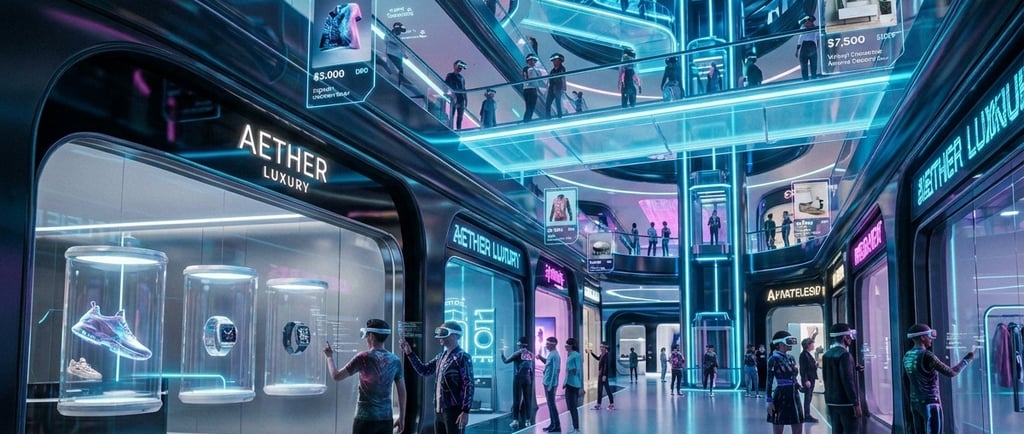
Imagine walking into a luxury shopping mall without ever standing up from your couch. You put on a lightweight headset, step into a beautifully rendered digital flagship store, browse through three-dimensional apparel racks, chat directly with an AI-driven brand assistant, test out a piece of furniture in a virtual living room, and complete your checkout with a single tap.
This isn't a scene from a cyberpunk film—this is the reality of modern consumer behavior.
Traditional e-commerce changed the world by prioritizing speed and convenience, but it stripped away something vital: the sensory joy, social connection, and experiential magic of physical retail. Standard flat websites with 2D grid photos can feel sterile, driving high drop-off rates and costly product returns.
As we advance through 2026, forward-thinking brands are moving past static web design into immersive virtual stores and spatial commerce. Welcome to the era of retail in the Metaverse.
What Exactly is Metaverse Shopping?
At its core, Metaverse shopping bridges the gap between digital accessibility and physical presence. Instead of scrolling through text menus, customers control an avatar or a first-person viewpoint to actively navigate a persistent, three-dimensional retail environment.
Inside a fully realized virtual storefront, shoppers can:
Walk through digital showrooms structured exactly like physical flagships.
Inspect merchandise in high-fidelity 3D, viewing textures and scale from any angle.
Interact with spatial product hotspots that instantly trigger video explanations or styling ideas.
Attend live, global virtual product launches alongside thousands of other shoppers simultaneously.
Engage with mixed-reality assets that project digital inventory directly into their physical homes.
Why the Retail Industry is Capitalizing on Spatial Stores
Traditional flat e-commerce has hit a ceiling. Brands struggle with short attention spans, low customer loyalty, and massive overhead from returns due to incorrect sizing or unmet expectations. According to global consumer insights shared on E-commerce on Wikipedia, adding interactive spatial components to digital stores dramatically decreases transaction friction.
By building a virtual showroom, brands move the customer from a passive, transactional state into an active, emotional relationship with the product.
Massive Business Advantages of Virtual Retail
1. High-Precision Virtual Try-Ons
Using computer vision and Augmented Reality (AR), buyers can see exactly how a watch looks on their wrist, how apparel drapes over their physical frame, or how a velvet couch fits into their actual living room space. This interactive validation sky-rockets purchase confidence and cuts down product return rates by significant margins.
2. Unlimited Brand Storytelling
In the physical world, retail design is bound by gravity, real estate costs, and regional construction laws. In a virtual storefront, the sky is the limit. A sustainable clothing line can build a showroom floating in a serene digital forest, while an athletic footwear brand can let users test virtual sneakers on a digital Martian running track. This creative freedom builds unforgettable brand recall.
3. True Global Borderless Accessibility
A virtual store removes all geographical limits. A boutique artisan shop in Mumbai or a high-end designer showroom in Milan can host buyers from New York, Tokyo, and London simultaneously. Your retail footprint expands instantly from a local street corner to a highly scalable global marketplace.
4. Deeper Interactive Product Demos
For high-end electronics, luxury timepieces, or complex machinery, a flat text description card doesn't cut it. Immersive commerce allows users to virtually "explode" a product schematic, looking at internal engineering components, layer by layer, generating profound product clarity before making a luxury purchase.
Industries Generating the Highest ROI from Virtual Stores
Retail discussion spaces like r/metaverse on Reddit consistently highlight that experiential shopping models are driving major growth across several key market segments:
Fashion & High-End Luxury: Interactive digital fittings, limited-edition avatar wearables, and immersive virtual runway seats.
Automotive: Digital car showrooms allowing buyers to customize cabin trims and take virtual test drives from home.
Furniture & Interior Decor: Seamless spatial placement tools ensuring furniture pieces scale perfectly to room dimensions.
Real Estate & Hospitality: Interactive property tours and virtual resort walk-throughs that secure remote bookings.
The Foundation: Why 360° Photography is the Gateway to the Metaverse
Transitioning your business into spatial commerce doesn't mean you have to build an entirely fictional cartoon landscape. The most successful virtual stores are built on a foundation of photorealistic 360° capture.
By deploying ultra-high-resolution panoramic cameras like the Insta360 Pro 2, brands can capture the exact lighting, premium materials, and authentic aesthetic of their physical flagship properties. This pristine real-world imagery is then transformed into an interactive digital twin web portal, giving users a premium, trusted experience that looks and feels genuine.
Future Trends Shaping the Next Decade of Retail
AI-Powered Personal Stylists: Interactive avatars that analyze your purchase history to guide you through virtual showrooms in real time.
Hyper-Personalized Dynamic Storefronts: Virtual store layouts that automatically rearrange their displays, color schemes, and product highlights the moment you walk in, custom-tailored to your unique tastes.
Tokenized Asset Commerce: Seamless integration where buying a physical jacket instantly unlocks a verified digital version for your online gaming avatar.
Recommended Viewing
To see how global retail leaders are utilizing spatial platforms to create high-converting online spaces, explore active virtual flagship showcases on YouTube.
Search on YouTube: Look for "Best virtual reality retail store examples" or "Obsess VR shopping platform tour" to see live footage of how consumer brands use interactive web spaces to increase global sales.
How 360 VR Photography Launches Your Brand into the Future
Stepping into spatial commerce requires a specialized technical partner who understands both design aesthetics and complex web integration. At 360 VR Photography, we specialize in turning traditional brick-and-mortar setups into premium, high-converting virtual storefronts.
Our core digital retail solutions include:
Custom-Built Metaverse Shopping Experiences & Virtual Showrooms
Ultra-High-Definition 360° Product Spins & Spatial Asset Modeling
Interactive 360° Virtual Tours mapped with custom e-commerce checkouts
Augmented Reality (AR) product visualization frameworks
Immersive Virtual Product Launch production utilizing the Insta360 Pro 2
AI-Enhanced digital brand environments and interactive storytelling
Frequently Asked Questions (FAQ)
Q1: Do my customers need a VR headset to access a virtual store?
A: Not at all. Over 90% of current virtual store traffic happens on standard web browsers via smartphones, tablets, or laptops. Users simply drag their fingers or mouse to walk through the store and click on products. Headset compatibility is simply an added layer for those who want deep immersion.
Q2: How difficult is it to connect a 360° virtual store to an existing e-commerce platform like Shopify?
A: It is incredibly seamless. Our interactive virtual showrooms are designed to integrate directly with your existing backend e-commerce architecture. When a user clicks a product hotspot inside the 360° view, it pulls the item directly into your current shopping cart system without disrupting checkout.
Q3: Can a virtual store layout be changed easily for seasonal sales or holiday themes?
A: Yes. Because the interface is built on a modular digital framework, we can easily swap out product hotspots, adjust promotional graphics, update background media, or launch seasonal sales banners instantly without needing to reshoot the physical space.
Lead the Next Wave of Global Commerce: Contact Us Today
Ready to transform your retail presence into a highly engaging, borderless digital destination? Let’s collaborate to build an immersive virtual store that redefines how your audience shops.
Founder: Viral Gala
Company Name: 360 VR Photography
Contact Number: +91 9920322366
Websites: 360vrphotography.in | 360vrphotography.com

Experience
Engaging virtual tours for real estate and events.
Innovative
info@360vrphotography.in
+91 9920322366