Add your promotional text...
Mounting Insta360 Pro 2 on a Drone – Risks, Failures & Safer Alternatives
Is it safe to mount an Insta360 Pro 2 camera on a drone? Discover real test results, challenges with aerodynamics, risks of financial loss, and why smaller 360 cameras like Insta360 X4 with DJI FPV drones are smarter options.
Viral Gala
9/22/20253 min read
The High-Risk Flight: Should You Mount Insta360 Pro 2 on a Drone?
Drone cinematography offers breathtaking perspectives, and the dream of mounting a powerful 360° VR camera like the Insta360 Pro 2 for stunning aerial shots is understandable. But is it truly safe, practical, or financially viable?
I personally tested the Insta360 Pro 2 with different drones, and here's the honest truth: mounting this expensive, football-sized camera on a drone is highly risky and often not worth the massive investment. Let's explore why smaller, modern 360 cameras are the smarter choice for the sky.
⚠️ Real Test Results: Instability and Near-Crashes
The Insta360 Pro 2 is a beast for ground-based VR—but a liability in the air. Its official weight is approximately $1550 \text{g}$ ($\approx 3.4 \text{lb}$), which is simply too much for most prosumer drones.
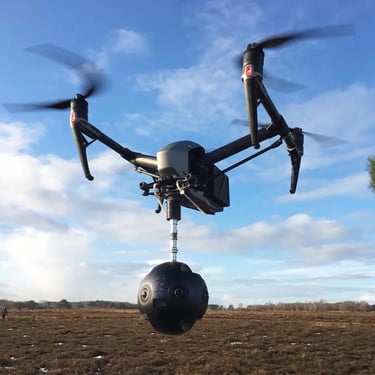
Test 1: Insta360 Pro 2 on a DJI Inspire
My first attempt was with a capable drone, the DJI Inspire. The results were immediate and disappointing:
The Pro 2 is bulky and not aerodynamic, essentially like flying with a football attached to your drone.
The aircraft became instantly unstable, developing a terrifying pendulum effect in the air.
I had to land immediately to prevent a crash.
Manufacturer Warning Confirmed: Insta360 officially notes that while the DJI Inspire series can be used, the mounting "has high risk" due to the camera's size and weight (Source: Insta360 Pro 2 User Manual, Aerial Shooting Section).
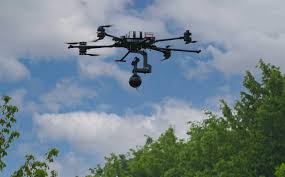
Test 2: Insta360 Pro 2 on a Large Agricultural Drone
Next, I tried a brute-force approach with a massive agriculture drone. It technically carried the weight, but new problems emerged:
Footage was captured, but editing became a nightmare due to the drone's massive body causing significant top-patch/stitching problems.
The biggest showstopper was the catastrophic financial risk.
💸 The Unacceptable Financial Risk
This is the non-negotiable reality of flying a high-end setup. Prices in India confirm the severity of the potential loss:
ComponentEstimated CostInsta360 Pro 2 Premium Bundle$\approx$ ₹6.4–7.4 lakhsLarge Drone (e.g., Ag Drone/Heavy Lift)$\approx$ ₹5 lakhs +Total Potential Loss$\approx$ ₹12 lakhs(Source: Everse India & Tradeindia Listings)
No project is worth this kind of risk. Critically, I found that no client was willing to cover that massive liability in the event of a crash. This single factor makes the setup non-viable for almost all professional shoots.
✅ The Smart Solution: Lighter Camera, Lower Risk
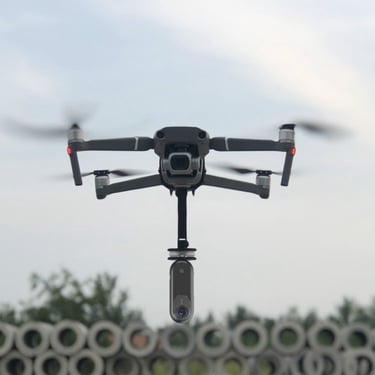
The realistic, professional solution is to leverage the excellent stitching and stabilization of modern, smaller cameras, which weigh 7-8 times less than the Pro 2.
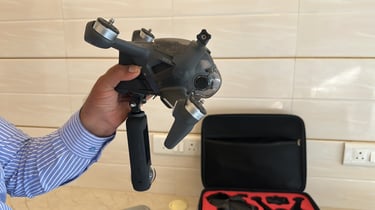
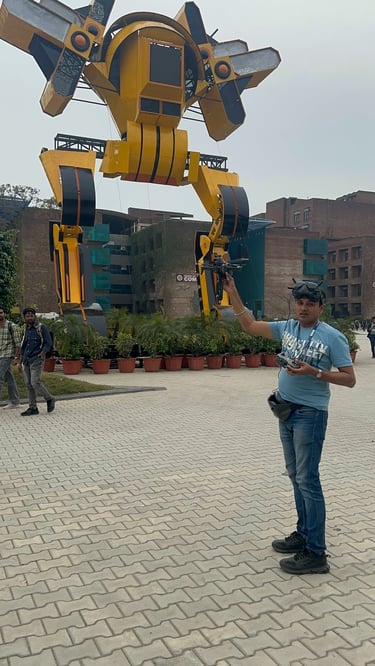
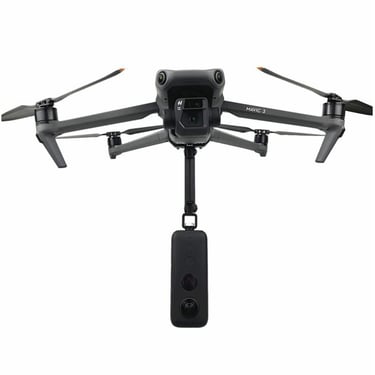
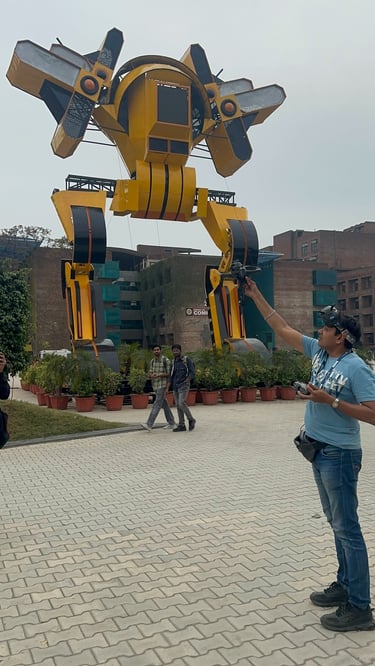
My Winning Setup: Insta360 X4 + DJI FPV Drone
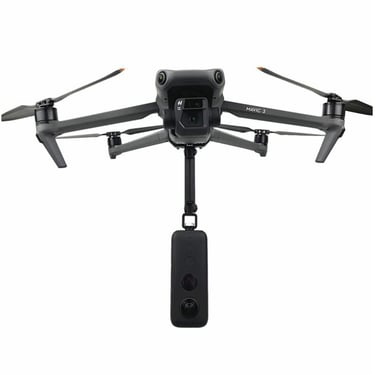
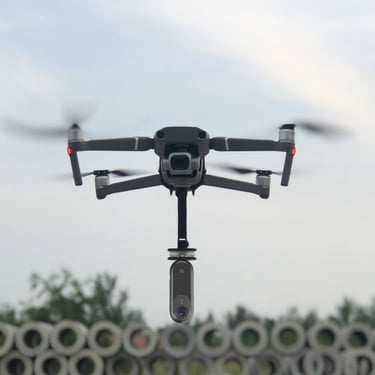
Switching to this lighter, agile combination solved every problem:
ComponentKey SpecsCamera: Insta360 X4Only $\approx 200 \text{g}$Drone: DJI FPVCost $\approx$ ₹1 lakhTotal Potential Risk$\approx$ ₹1.5 lakh (Manageable)(Source: PCMag Best 360 Cameras 2025 & Insta360 Official Specs)
This setup worked smoothly every time:
Stable flights and excellent handling.
Proper, high-quality footage.
Significantly lower risk (about 20% of the Pro 2 setup's risk).
🚫 Final Verdict: Don’t Risk the Pro 2 on Drones
While the Insta360 Pro 2 is a powerful tool for ground-based VR, mounting it on a drone is unsafe, unstable, and financially reckless.
For almost all aerial 360 projects, a lighter camera like the Insta360 X4 or Insta360 One RS 1-Inch Edition paired with an agile FPV drone will deliver professional results with a fraction of the risk.
💡 Essential Tips for Safe 360 Drone Filming
Before you lift off with any 360 camera:
Check Weight Limits: Always confirm the camera weight is well within the drone's safe lift capacity. Many standard drones have a maximum effective payload of only $\approx 500 \text{g}$ to $2 \text{kg}$ (Source: Jetayu Gadgets Payload Guide 2025).
Mind the Aerodynamics: Bulky, ball-shaped cameras will always destabilize flight. Prioritize sleek, compact cameras like the X4 series.
Calculate Financial Exposure: Ensure the total gear cost is a manageable risk compared to your project's value.
Use Protection: Employ protective cages or mounts designed to minimize vibrations and accidental damage.
Get Client Sign-Off: If an expensive setup is unavoidable, get written client approval explicitly covering the financial liability.
Frequently Asked Questions (FAQs)
1. Is it safe to mount Insta360 Pro 2 on a DJI drone?
Technically possible, but highly unsafe. The Pro 2's weight and shape create severe aerodynamic instability, causing a dangerous pendulum effect. Insta360 advises against using the Inspire series due to the high risk.
2. Which 360 camera is best for drone filming?
Lighter, compact cameras like the Insta360 X4 ($\approx 200 \text{g}$) are far better. They are easier to balance, don't overload the drone, and produce excellent footage while keeping the flight safe (Source: Digital Camera World Best 360 Cameras 2025).
3. What is the total financial risk of flying the Pro 2?
If the gear falls, the loss for the camera and a suitable heavy-lift drone is around ₹12 lakhs (Source: Everse India & Tradeindia Listings).
4. Can clients be charged extra if they insist on the Pro 2 setup?
Yes. Since the financial risk is so high, you must clearly inform the client of the potential losses and get written agreement from them to cover the liability if they insist on using that specific, risky gear.

Experience
Engaging virtual tours for real estate and events.
Innovative
info@360vrphotography.in
+91 9920322366